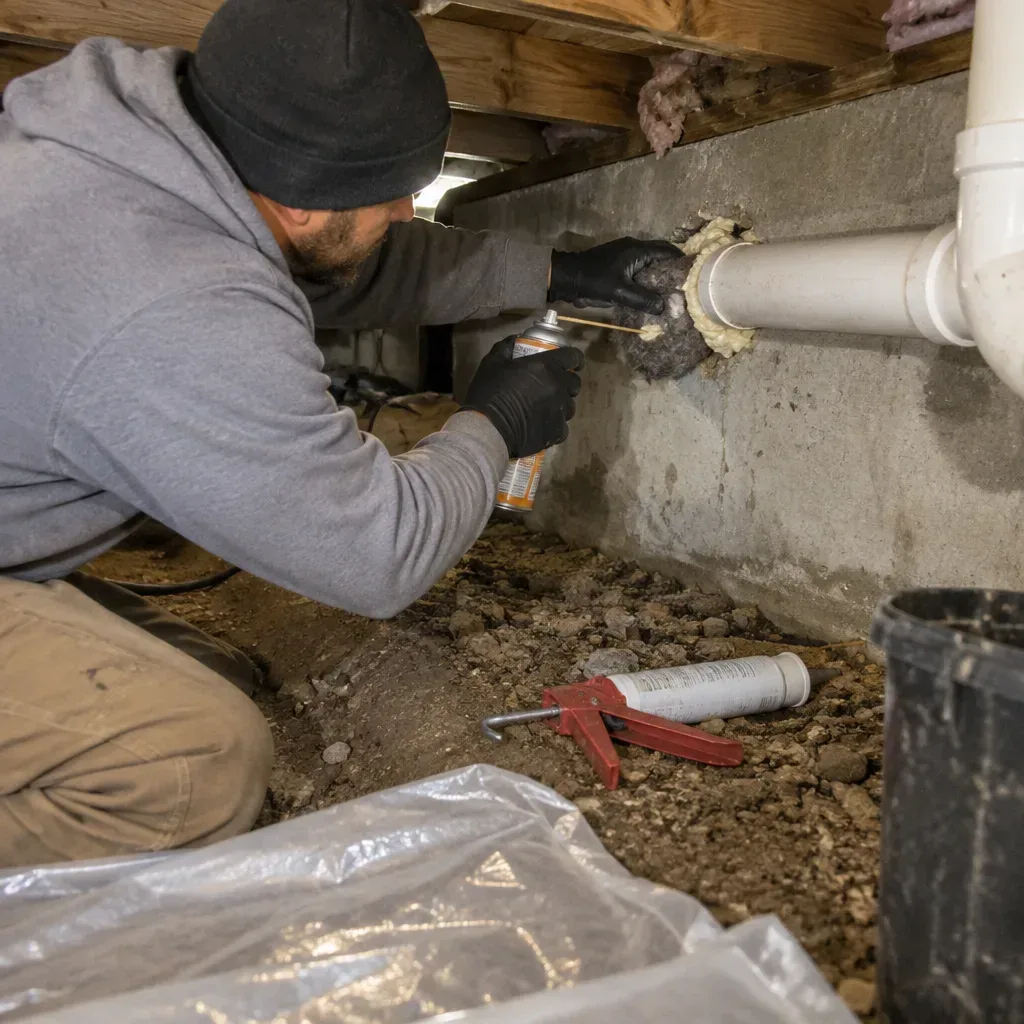
Using Steel Wool at Waterbury Rodent Gaps
See where steel wool can deter gnawing, and where dampness or heat limits its use.
Steel wool can deter gnawing at small, snug entry gaps when the area is dry and sheltered. It may rust, loosen, or be unsuitable near heat, so assess the opening’s size, location, and exposure first. A durable sealant or another material may be needed.
What Steel Wool Can Do
Rodent exclusion cost depends on how many openings need attention, their size, and how easy they are to reach. In Waterbury, steel wool may suit a small, sheltered gap, but inspection comes first. A homeowner can note where droppings, gnaw marks, or nesting material appear, then look for nearby openings. These signs can guide an inspection; they do not confirm which rodent is present. Near Lock 12 Historical Park, as elsewhere in the city, the opening’s actual condition matters more than its location.
After noting signs, check the suspected opening’s size and exposure from a safe, accessible position. Steel wool is a mass of fine metal fibers that can make a small gap harder for rodents to gnaw through. It is not a stand-alone fix for every opening. Waterbury homes may have different materials and conditions, so the observed gap—not a general assumption about the neighborhood—should guide whether this material is suitable.
A close look should also establish whether the gap stays dry, sits out of direct weather, and is away from heat. Steel wool for mice can be useful in a small, sheltered opening when the fit is snug. It can shift if loosely packed, and an oversized void needs a different approach. A homeowner can record the location and exposure before deciding whether a temporary block is appropriate or asking an independent local professional about a hard-to-reach gap.
Observe the Opening and Nearby Signs
Steel wool rodent control works as a physical deterrent: the tangled fibers resist gnawing better than a soft, open gap. The material does not trap rodents or remove signs of activity. In Waterbury, a homeowner should first connect the suspected opening with nearby droppings, gnaw marks, or sounds. An inspection can help determine whether the gap is an entry route. The Naugatuck River is one local landmark, but its presence does not establish rodent activity at any particular property.
Small steel wool entry holes are the material’s more suitable use, especially when the spot is dry and protected. A snug piece may serve as a short-term barrier while the opening is assessed. It can work loose over time, so it should not be treated as durable exclusion by itself. A small business owner in Waterbury can apply the same assessment: note the signs, locate the suspected gap, then consider its size and exposure.
The fibers may compress into a narrow, irregular gap, but that does not make steel wool a universal filler. If the opening is wide, crumbling, or difficult to inspect, the material may not stay in place or address the underlying access. An owner should record what is visible without enlarging or disturbing the gap. For a hard-to-reach location in Waterbury, an independent local professional can help assess which material fits the conditions.
Check for Moisture and Heat
Moisture changes the choice. Ordinary steel wool can rust when it stays damp, which weakens the material and may stain nearby surfaces. Waterbury weather can include snow and ice, so an exposed outdoor gap deserves particular attention to wetness and drainage. A homeowner should note whether water reaches the opening before relying on steel wool. A dry, sheltered location is a better fit than a spot regularly exposed to rain or melting snow.
Exposure also matters in a small commercial property. Wind or repeated contact can loosen a temporary plug, while rust can reduce its usefulness. The Naugatuck Green is outside Waterbury, but it is a familiar regional reference; it says nothing about conditions at an individual building. For any Waterbury property, inspect the opening itself and note whether it is sheltered, damp, or disturbed before choosing a barrier.
When Steel Wool Needs Support
Heat is another limit. Steel wool is metal, but nearby heat sources can make the surrounding materials unsafe or unsuitable for a packed barrier. Do not place it where it could contact hot equipment, wiring, or a flame. In Waterbury, an owner assessing a small business or home should identify heat and moisture exposure along with the opening’s size. If the area is hard to view safely, leave that assessment to an independent local professional.
For a suitable small gap, steel wool may be paired with a compatible durable sealant or another material to help hold it in place. The right combination depends on the surface and exposure; steel wool alone can shift or corrode. A homeowner should identify the opening and its conditions before selecting materials. Cheshire Park is another named local-area landmark, but no landmark predicts a property’s needs. Each Waterbury gap requires its own assessment.
What to Check Before Choosing
- Note droppings, gnaw marks, or nesting material before linking activity to a suspected opening.
- Record the gap’s size, location, moisture, weather exposure, and nearby heat before choosing steel wool.
- Treat steel wool as a limited barrier; damp, loose, exposed, or hard-to-reach gaps need further assessment.
- Check whether the opening is narrow enough for a firm fit; loose fibers can leave space, while a poor fit may pull free with movement.
- Note whether the spot stays dry and cool; moisture can rust the fibers, and high heat can make steel wool unsafe near hot equipment.
- Treat steel wool as a gap filler, not a complete repair; a compatible durable sealant or other material may be needed to hold it in place.
Rodent Control Basics
How does steel wool help deter mice from a small gap?
Steel wool can make a small opening harder for rodents to gnaw through when it fits snugly and stays dry. It is a physical barrier, not a trap or a complete control method. In Waterbury, first note signs such as droppings or gnaw marks, then assess the suspected gap’s size and exposure. Damp, exposed, hot, or hard-to-reach openings may need another material or professional assessment.
Where is steel wool suitable for rodent entry gaps?
It is best suited to small, sheltered gaps where the fibers can sit firmly without contacting heat. It may work as a temporary barrier while an opening is assessed. A loose fit can shift, and a larger void needs a different approach. A Waterbury homeowner should note the opening’s size, location, and exposure before choosing a material.
Can moisture or heat make steel wool a poor choice?
Yes. Ordinary steel wool can rust when it remains wet, weakening the barrier and possibly staining nearby surfaces. Wind or contact may also loosen it, and heat nearby can make the location unsuitable. Before relying on steel wool in Waterbury, check whether the opening stays dry and protected. Consider a compatible durable sealant or another material if conditions could damage or dislodge it.
Have the Opening Assessed
Ask the pros we connect you with to assess the opening’s size, reach, and exposure before choosing steel wool or another suitable material.
Call (203) 884-8369