Availability varies — call to confirm. · (203) 884-8369
Rodent Droppings in Waterbury, CT
Droppings Indoors

Rodent Control for Droppings in Waterbury, CT

Winter weather can delay outdoor inspections, leaving indoor droppings as a separate clue to assess. Assess each finding on its own and follow safe cleanup guidance.

INSPECTION PLAN

Rodent droppings are waste left by rodents, and they can carry germs. In a Waterbury home, treat them as potentially contaminated material and consult current public-health directions before handling. Droppings alone do not establish when a rodent was present.

RODENT TRACES

Scratching Sounds Inside Walls

Droppings, damaged items, nesting material, and unexplained sounds are signs that may lead an owner to ask for help.

Dark, rice-shaped pieces sit beside a baseboard.

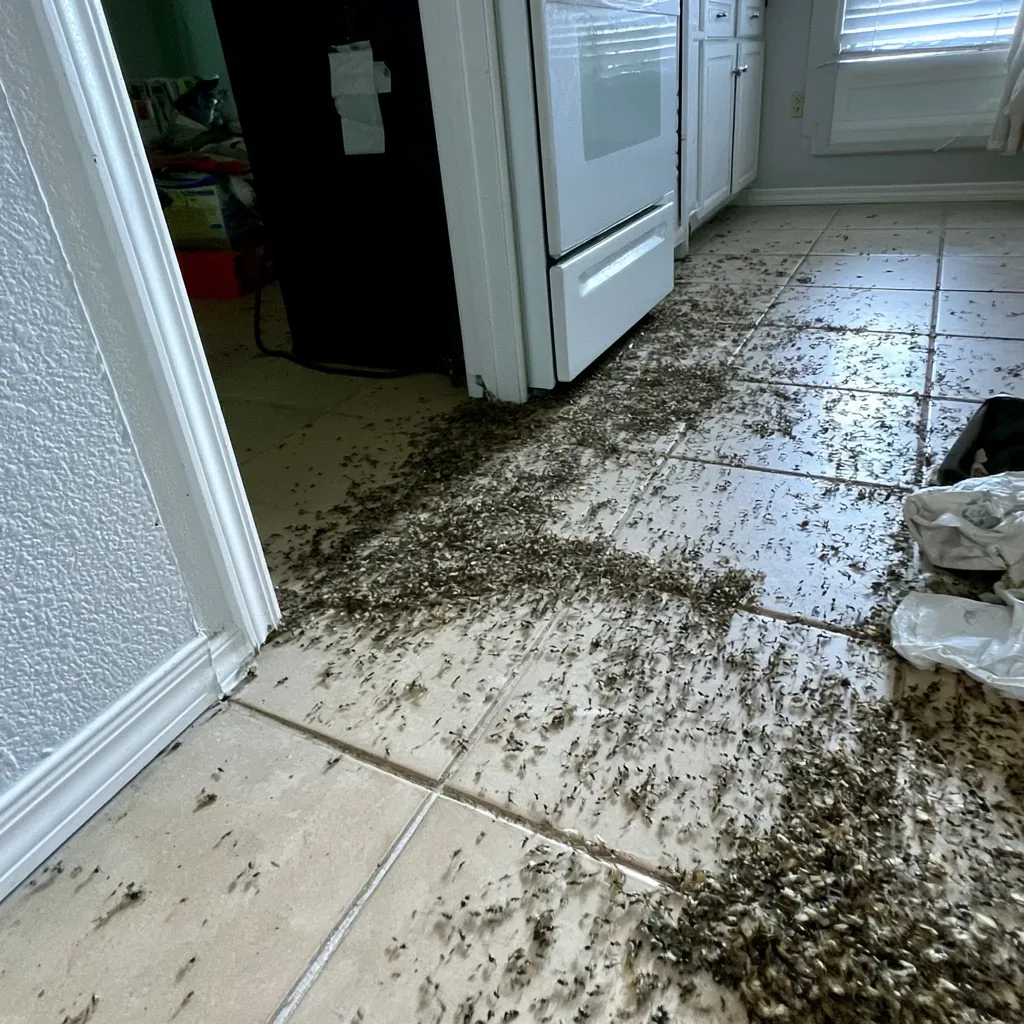
Small dark pellets may be rodent droppings, but appearance alone is not conclusive. Avoid handling or sweeping them. Follow public-health cleanup guidance, and seek help if the material is extensive or hard to reach.

Near Waterbury Green, dark pieces lie beneath shelving.

Gnaw marks can point to rodent activity near the droppings, though they do not identify the animal or prove it remains. Note where both clues appear. Avoid disturbing the droppings while deciding on safe cleanup or qualified help.

A home near Mattatuck Museum has pellets by a wall.

Nesting material near droppings is another possible sign of rodent activity. Do not pull it apart or stir nearby debris. Keep others clear, follow public-health guidance for the droppings, and seek help if the area is difficult to access.

Near Saint Mary's Hospital, a homeowner spots scattered dark pieces.

Scratching sounds can add context to droppings, but sound alone does not confirm their source. Note when and where it occurs without opening walls or moving stored items. Avoid disturbing droppings, and seek an assessment if clues continue.

Dry, pellet-shaped pieces remain on a room floor.

New droppings after safe cleanup may mean activity is continuing. Do not repeatedly sweep or vacuum them. Keep people and pets away, follow public-health guidance, and ask a qualified professional for help if the deposits return or spread.

Food And Shelter Draw Rodents Inside

Waterbury homes and small businesses sit in varied settings across the city. A finding near Waterbury Green is not evidence of a neighborhood trend; it needs to be considered where it appears and alongside other clues.

Interstate 84 is a verified Waterbury place reference, not a measure of rodent activity. In houses or small commercial properties nearby, droppings still need an individual assessment rather than assumptions based on location.

Residents and small businesses in Waterbury and Naugatuck Valley County may seek an assessment when they notice signs of rodent activity. Noting where activity appears can give the assessment a clearer starting point.

Sealing Entry Gaps

Appearance
Droppings can indicate rodent activity, but a single finding does not establish whether activity is ongoing.
Exposure
Gnaw marks, nesting material, and sounds may add context to droppings; none alone confirms the source.
Nearby Clues
Dry sweeping or vacuuming can stir contaminated dust into the air. Keep the material undisturbed until following safe cleanup guidance.
Cleanup Limits
Large accumulations and difficult-to-reach deposits are reasons to seek qualified cleanup help.
Next Steps
Waterbury Green and Mattatuck Museum are local references, not evidence of rodent prevalence in nearby properties.
ACTIVITY ROUTES
Winter weather can delay outdoor inspections, leaving indoor droppings as a separate clue to assess. Assess each finding on its own and follow safe cleanup guidance.
FOLLOW-UP VISITS
an estimated $80–$175

Reading Droppings With Care

Cockroach droppings. They can also appear as small dark marks, so the source may be unclear from appearance alone. An inspection can help distinguish insect signs from evidence of rodents. Mud crumbs and other debris can resemble dark pellets when mixed with dust. Do not crush or sweep the material to check. A qualified professional can assess its appearance and setting; uncertain debris is not proof of rodent activity.

Signs That Help Locate Rodent Activity

The pros we connect you with can discuss what the material looks like, where it was found, and whether an assessment is appropriate. Findings help distinguish possible rodent evidence from other debris. The provider should explain the proposed scope before work begins.

For an extensive or inaccessible accumulation, ask whether the provider handles cleanup or can recommend qualified help. The steps depend on the location and condition of the material. In a small commercial property, the owner can also ask how to keep staff clear until the area is addressed.

One visit may fit a limited finding when access points can be addressed. Follow-up checks matter if signs continue, devices need attention, or routes remain unclear. Ask what inspection found, what remains open, and why another check would help. Ongoing cover should have a stated reason.

ONE-TIME ATTENTION AND CONTINUED RODENT MONITORING
Activity Signs Practical Option
Early signs of a minor rodent issueFollow-up checks
Rodent signs returning after earlier controlentry-point sealing
Repeated activity signs near unsealed access gapsGaps sealed; devices monitored

Clean Rodent Signs With Care

Keep children and pets away from the droppings. Do not sweep, vacuum, or handle them dry. For a small, reachable amount, follow current public-health cleanup guidance. Stop and seek qualified help if the accumulation is extensive, difficult to reach, or unsafe to approach.

Germs in Rodent Droppings and Urine

Droppings and urine can carry germs. Sweeping or vacuuming may stir contaminated dust into the air. Keep people and pets clear, avoid disturbing the material, and follow current public-health cleanup guidance. A large or hard-to-reach accumulation calls for qualified cleanup help.

Plan for Rodent Service Expenses

Inspection findings and the work a property needs shape the cost. Ask the pros we connect you with for an estimate based on those conditions.The guide range for rodent work covers the stated inspection and control scope; it excludes repairs or added visits not agreed. A house near the Waterbury Green may need different work from a small business near the Mattatuck Museum, based on inspection findings. The pros we connect you with confirm any visit charge and exact scope directly.pricing guide explains where to find the full price bands. Rodent Inspection describes this rodent-control work.
RODENT CONTROL DETAILS

Signs That May Point to Rodent Activity

Rodent Gnawing Damage

Rodent damage signs. A rodent inspection can record where gnaw marks appear, assess…

Rodent Q&A

Rodent Control Basics

What should I do first after finding droppings indoors?

Keep children and pets out of the immediate area. Do not sweep, vacuum, or handle the droppings; stirring them can raise contaminated dust. Follow current public-health cleanup directions before handling the material. A homeowner near Waterbury Green needs the same care as a shop near Mattatuck Museum. For a large or hard-to-reach accumulation, ask the pros we connect you with about qualified cleanup help.

Could these dark specks be something other than rodent droppings?

They could be. Appearance alone may not settle what left a small dark deposit, especially when it is mixed with dust or debris. Avoid touching or disturbing it while considering the surrounding clues. In a Waterbury home, a homeowner can describe where it appeared and share a clear photo with a qualified professional. That context can help assess whether the material is consistent with rodent activity without treating an uncertain mark as proof.

When should I get help with droppings I find inside?

Seek qualified help when droppings cover a broad area, sit somewhere difficult to reach, or keep appearing after safe cleanup. Do not climb into a tight space or disturb a heavy accumulation to inspect it. A Waterbury homeowner can explain the location and extent before arranging an assessment. In a small commercial property, keep staff away from the affected area and ask what cleanup support the provider offers.

Do a few droppings mean rodents are still inside?

A few droppings do not establish whether rodents remain indoors. They show that a rodent was present at some point, but the material alone cannot confirm current activity or when it was left. Do not treat a small count as proof the building is clear. In Waterbury, an owner near Interstate 84 can note whether new signs appear later. An opening along an exterior wall may help explain how rodents entered the building.

Rodent Help

Dealing with rodent droppings right now?

The visit charge can vary with the inspection scope. Call the pros we connect you with and confirm that charge before scheduling. Ask what the visit covers. After inspection, request the findings and proposed work in writing so the owner can review the next steps.

Call (203) 884-8369
Check open dates, visit timing, inspection fees, and the written plan
Call (203) 884-8369 Schedule Online