Compare Body Shape and Tail Length
Size is a useful first clue when identifying a rodent in a Waterbury home. Rats tend to have larger bodies and thicker tails; mice look smaller, with finer features. Compare the body and tail together rather than judging by color. A quick glimpse can distort size, especially when the animal is moving or partly hidden. Note what you could see, such as its outline, tail length, and approximate size. Those details can help the pros we connect you with assess whether the sighting points to a rat or mouse.
A rat often appears heavier, while a mouse looks more delicate beside familiar objects. In Waterbury, record the object used for comparison, such as a baseboard or storage bin, without approaching the animal. Tail length helps, but distance can make a long tail seem short. Ears and the shape of the head may add clues when visible. No single feature settles every sighting. A clear description of several features is more useful than a confident guess based on one blurry view.
Use Droppings as a Size Clue
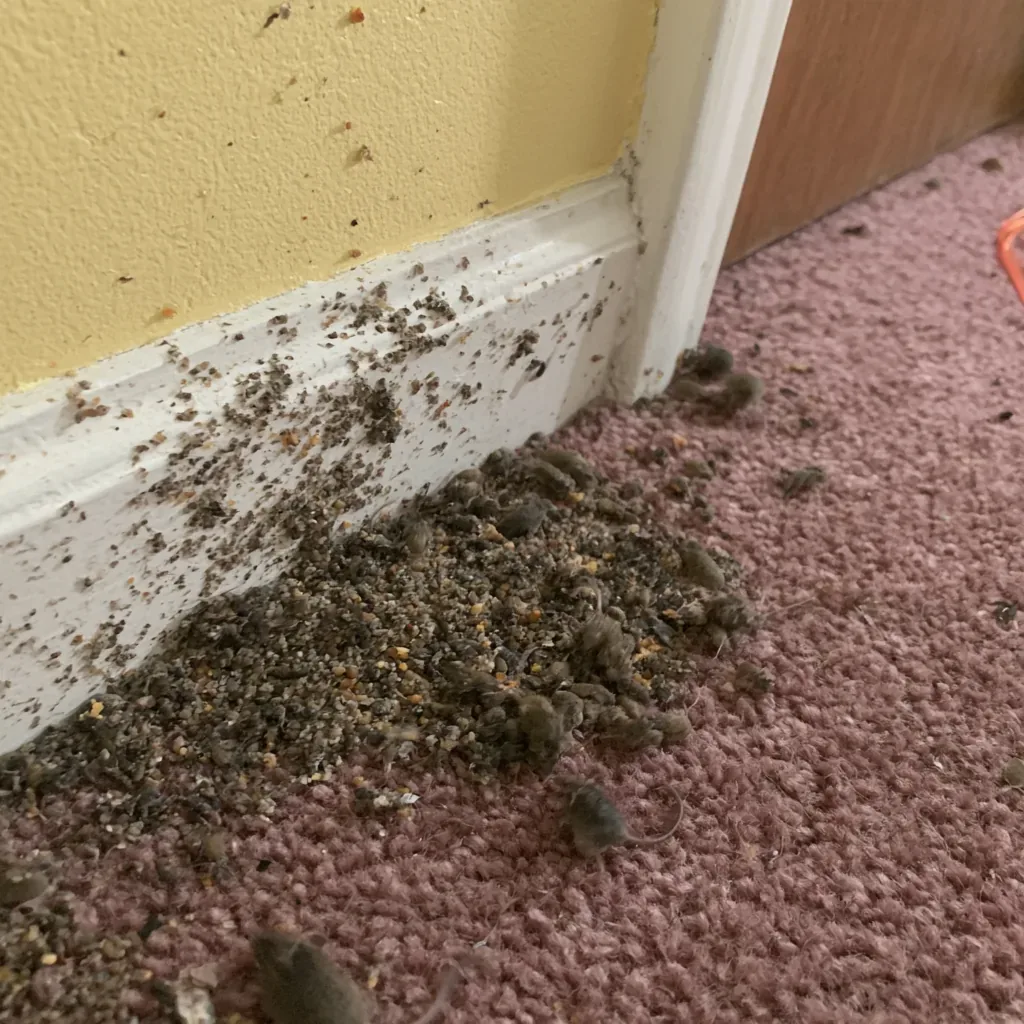
Dropping size can support a rat versus mouse comparison in a Waterbury property. Rat droppings are generally larger than mouse droppings, but one piece alone may be hard to judge. Look at several examples from the same area and note their approximate size and shape. Do not handle them. Their appearance can change with age or condition, so this clue works best alongside the animal’s body and tail. An inspection can assess whether the signs fit ongoing rodent activity.
A homeowner in Waterbury can note whether droppings appear near food storage, along a wall, or in a quiet corner. The location helps describe where activity may be occurring, but does not identify the rodent by itself. A small commercial property can make the same note near storage or work areas. Keep the description simple: where the signs were found, how many areas showed them, and whether the material looked fresh. These observations help an assessor compare clues without relying on one sign.
Read the Signs Around a Sighting
Gnaw marks, nesting material, and sounds can show where rodents may travel in Waterbury homes. Marks on a surface do not reveal the animal’s size by themselves. Their height, width, and nearby signs add context. A homeowner can note whether sounds came from a wall, ceiling, or storage area, and when they were heard. The pros we connect you with can use those details to focus an inspection. Signs point toward activity; they do not confirm a rat or mouse alone.
In Waterbury, note the room and the route between a sighting and nearby signs. A small commercial property might have activity reported near a back room, while a home may have signs along a hallway. These are examples of useful location details, not evidence that either setting has rodents. A reference such as Lock 12 Historical Park can help describe where a property is. The indoor location remains more useful for tracing activity and comparing the physical clues.
Share Details for an Assessment
Assessment cost can depend on how much of a Waterbury property needs inspection and how many signs require review. A brief sighting in one room may leave more uncertainty than repeated signs across several areas. A homeowner should note the rodent’s approximate size, visible features, and exact location. At a small commercial property, record which room or work area was involved. Those details help the pros we connect you with understand the scope before assessing the evidence.
A sighting near the Naugatuck River or Naugatuck Green is only a location reference; it does not establish rodent activity there. For a Waterbury assessment, share where the animal appeared inside, what its body and tail looked like, and any nearby signs. Avoid treating one uncertain detail as a firm identification. Inspection can compare the clues and look for possible access points. What could a closer inspection tell that a brief sighting cannot?
Dealing with rodent activity in your home?
A note of earlier activity can give an inspection useful context. An inspection can help locate travel routes and possible openings. Small gaps around pipes or doors may deserve a closer look. Ask how inspection findings and possible next steps will be explained. The pros we connect you with can explain service coverage, available visit timing, and any visit charge. Ask what an inspection involves and what may affect the charge.